CIVIL ARCHIVE
Apocalypsis— The End of the World Archive
The world has almost ended many times. None of them by prophecy.
A sober archive of the end of the world — real, theoretical, speculative, fictional and failed-prophecy scenarios, ordered by whatever probability the literature actually allows.
Probability register
Logarithmic scale — from a decade to a billion years. Each marker is a scenario in this archive.
Carrington-class solar storm
Order of ~1 per century. Estimates of 1.6–12% per decade after Riley (2012) and revisions.
- 01APO-06AI existential riskNo published calibrated probability; declared a risk by CAIS (2023). No-estimate marker.
- 02APO-06Large-scale nuclear exchangeNo consensus estimate; ~12,100 warheads in 2025 (FAS). Multiple documented near-misses.
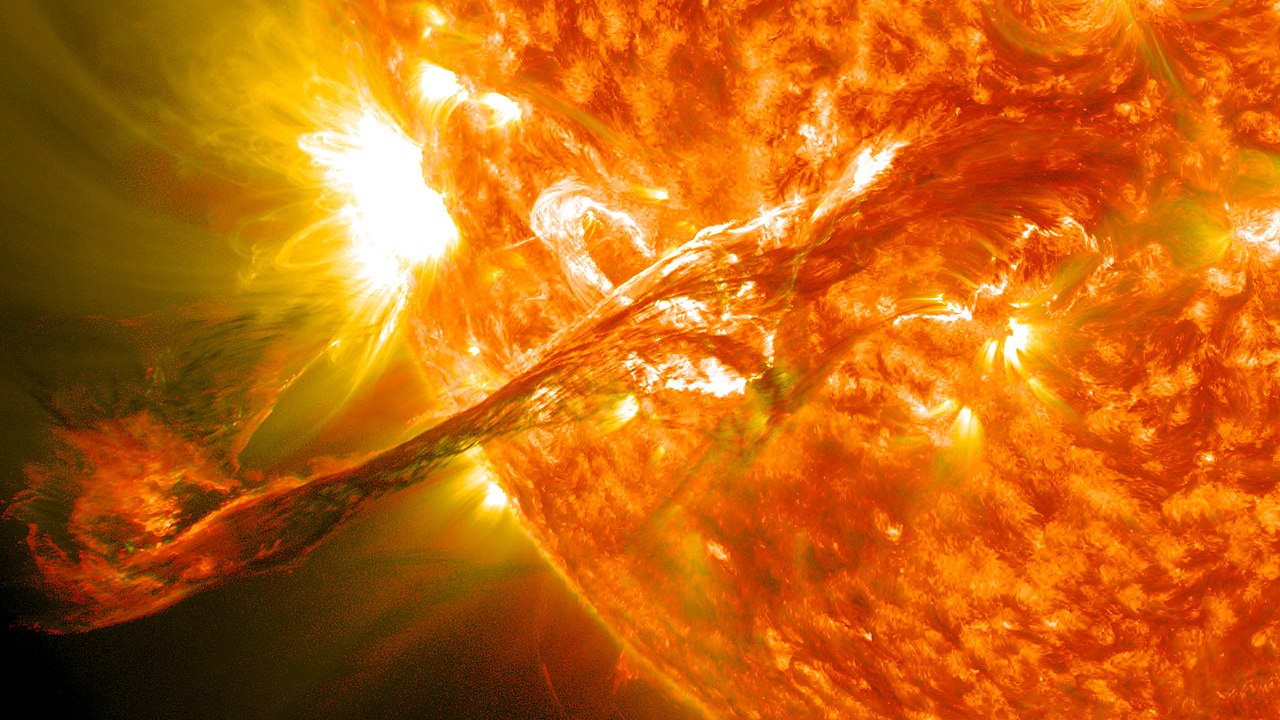
- 03APO-05Carrington-class solar stormOrder of ~1 per century. Estimates of 1.6–12% per decade after Riley (2012) and revisions.
- 04APO-06High-lethality pandemicMarburger et al. (2023): ~2% per year for 1918-scale events. Wide variation.
- 05APO-03~60 m impact (YR4-class)Once every few thousand years; regional, not civilisational.
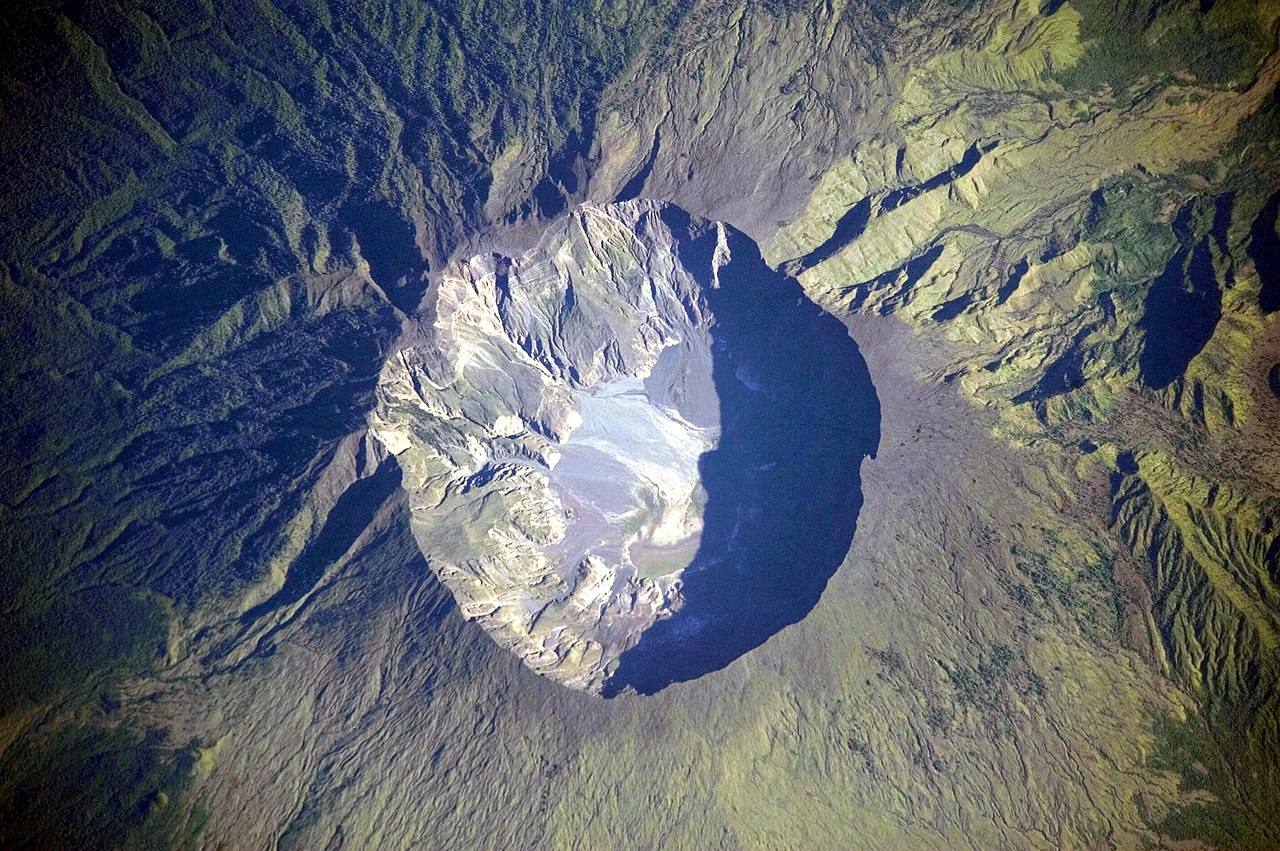
- 06APO-04Supervolcano (VEI 8)Order of 1 per ~10⁴–10⁵ years (Mason, Pyle & Oppenheimer, 2004).
- 07APO-03Chicxulub-class impact (~10 km)Order of 1 per ~10⁸ years (Alvarez et al., 1980).
- 08APO-07Sun makes Earth uninhabitable~1 billion years. Dated, distant. Schröder & Smith (2008).
- 09APO-07Heat death of the universeScale of 10¹⁰⁰ years. Too far to worry.
Created in 1947 by the Bulletin of the Atomic Scientists — founded in 1945 by Manhattan Project scientists, including Albert Einstein and J. Robert Oppenheimer, based at the University of Chicago. The clock image was designed by artist Martyl Langsdorf.
Adjusted by a Science and Security Board, in consultation with a Board of Sponsors that includes eight Nobel laureates. It has been reset 27 times since 1947.
January 27, 2026: 85 seconds to midnight — the closest to midnight in the clock's entire history. It moved from 89 seconds in 2025, and from 90 seconds in 2023 and 2024.
Cited reasons: expiring nuclear treaties, climate change, biological threats, and disruptive technologies — with AI named explicitly, alongside disinformation and conspiracy theories. Alexandra Bell, president and CEO of the Bulletin, summed it up: catastrophic risks are rising while cooperation is falling.
Mandatory critique: the clock is neither a prediction nor a measurement. It is a communication instrument, set by expert judgement rather than a quantitative model. It has been criticised for this subjectivity and for being uncalibratable. Record the critique with the same seriousness as the number.
seconds to midnight
CLOSEST IN HISTORY · BULLETIN OF THE ATOMIC SCIENTISTS
REFERENCE
- — Bulletin of the Atomic Scientists (2026). Doomsday Clock Statement, Jan 27, 2026.
The expanded version of this chapter is part of the full PDF dossier. Coming soon.
The best-documented story of "the end of the world that wasn't": asteroid 2024 YR4. Discovered in late December 2024 by the ATLAS survey in Río Hurtado, Chile — the same instrument that would discover 3I/ATLAS six months later. Detected two days after its closest approach, because it came from the sunward side.
Estimated diameter between 53 and 67 metres. An object this size hits Earth on average once every few thousand years — severe damage to a city or region, not to civilisation.
Automated systems flagged an Earth impact chance for December 22, 2032. The probability rose to about 3%, the object topped ESA's risk list, and it became the first asteroid to trigger a coordinated international planetary-defence response.
Feb 19–20, 2025: new observations dropped the chance to 0.28%; lunar impact chance rose slightly to 1%. Feb 24, 2025: CNEOS/JPL updated Earth impact probability to 0.004%. February 2026: JWST's NIRCam measured the orbit precisely enough to rule out lunar impact as well. The object will pass more than 20,000 km from the Moon.
Technical scales: the Torino Scale (Binzel, 1999) is a public scale from 0 (no risk) to 10 (certain collision, global scale) — YR4 briefly reached 3, the second-highest value ever assigned, behind only Apophis in 2004 (which hit 4 before being ruled out). The Palermo Scale is technical, logarithmic, comparing an object's risk to the background risk over the same interval — YR4 reached +0.10, the highest ever recorded for a small object.
Context: DART (NASA, 2022) successfully altered Dimorphos's orbit — the first real deflection test. ESA operates NEOCC, the Flyeye telescopes, and the Hera and Ramses missions. The NEOMIR concept aims to detect objects coming from the Sun's direction — the blind spot that nearly let YR4 through. Documented impacts: Tunguska (1908, ~50 m, Siberian forest flattened), Chelyabinsk (2013, ~20 m, ~1,500 injured), Chicxulub / K-Pg extinction (Alvarez et al., 1980, ~10 km).

The expanded version of this chapter is part of the full PDF dossier. Coming soon.
Permian–Triassic extinction ~252 million years ago, tied to the Siberian Traps, wiping out around 90% of marine species. The "Big Five" mass extinctions: Ordovician–Silurian (~445 Ma), Devonian (~372 Ma), Permian–Triassic (~252 Ma), Triassic–Jurassic (~201 Ma), Cretaceous–Paleogene (~66 Ma). Each one delimits a geological era.
VEI (Volcanic Explosivity Index) scale — Newhall & Self (1982), from VEI-0 to VEI-8. Each step is an order of magnitude. Toba (~74,000 years ago) and Yellowstone (~640,000 years ago) were VEI-8. Tambora (1815) was VEI-7.
Monitored supervolcanoes: Yellowstone (Wyoming), Campi Flegrei (Naples — accelerating uplift since 2005), Toba (Sumatra), Taupō (New Zealand), Aira (Japan, beneath Kagoshima). Note that the human population-bottleneck hypothesis linked to Toba is now contested by archaeological and genetic data.
Tambora (1815) and the "year without a summer" of 1816 — a real, documented case of global climatic disruption from volcanism. Failed harvests in Europe and the US; without that year there would probably be no Frankenstein, written by Mary Shelley during the lost summer at Villa Diodati.
Climate tipping points — Armstrong McKay et al. (2022), Science. Nine tipping points identified, several with activation temperatures already inside the 1.5–2°C band: AMOC (Atlantic overturning), Greenland ice sheet, West Antarctic ice sheet, Amazon rainforest, boreal permafrost, warm-water coral reefs, Arctic winter sea ice, Barents Sea ice, and Labrador Sea convection.
Antimicrobial resistance as a silent long-horizon risk — projection by Murray et al. (2022), Lancet: 39 million deaths attributable to AMR between 2025 and 2050 on current trends. Not the end of the world. A return to before 1928.
The expanded version of this chapter is part of the full PDF dossier. Coming soon.
G scale — NOAA SWPC (Space Weather Prediction Center). Runs from G1 (minor, ~1700 per solar cycle) to G5 (extreme, ~4 per cycle). Carrington would be G5+, off the normal scale.
Carrington Event (1859) — the largest geomagnetic storm on record; aurorae visible in the Caribbean; telegraphs operated without batteries, some caught fire. Described by Richard Carrington from direct solar observation. Riley (2012) estimated a ~12% per-decade recurrence probability; later revisions cut it to 1.6–4%.
Miyake events — abrupt carbon-14 spikes in tree rings, indicating solar events probably larger than Carrington. Three confirmed: 774–775 CE, 993–994 CE, 660 BCE. Miyake et al. (2012, 2013), Nature. Striking archaeological use: Kuitems et al. (2021), Nature, used the 993 spike to date felled wood at L'Anse aux Meadows to exactly 1021 CE — the first confirmed Norse trace in the Americas.
Quebec (Mar 13, 1989) — real province-wide 9-hour blackout as induced current saturated the Hydro-Québec transformer. Nine million people without power. Estimated damage: US$ 2 billion.
July 2012 — Carrington-scale CME crossed Earth's orbit; the planet had passed that point about nine days earlier. Baker et al. (2013), Space Weather. The digital era's near-Carrington.
Real vulnerability: high-voltage transformers (345 kV+), with 6 to 24 months replacement lead times and limited global spare stock; low-orbit satellites and GPS; HF radio at polar latitudes.
The expanded version of this chapter is part of the full PDF dossier. Coming soon.
Nuclear arsenal (FAS/SIPRI, 2025 estimate): ~12,100 warheads worldwide. Russia ~5,459 · United States ~5,177 · China ~600 · France ~290 · United Kingdom ~225 · India ~172 · Pakistan ~170 · Israel ~90 · North Korea ~50. About 3,900 are in operational status, 2,100 of those on high alert.
Nuclear winter — the TTAPS study by Turco, Toon, Ackerman, Pollack and Sagan (1983). Modern modelling by Robock & Toon: a regional India–Pakistan exchange (~100 warheads, 5 Tg of soot) would cause a global 1–2°C drop and prolonged agricultural disruption. A large-scale US–Russia exchange (~150 Tg of soot) would drop temperatures 8–10°C for years. Xia et al. (2022), Nature Food: global famine affecting billions.
Near-misses: Stanislav Petrov, Sep 26, 1983 — refused to report a false Soviet alarm of a US launch; likely saved us from nuclear war. Vasili Arkhipov, Oct 27, 1962 — refused the launch authorisation for a nuclear torpedo aboard submarine B-59 during the Cuban Missile Crisis; one of three officers whose approval was required. Able Archer 83 (Nov 1983) — NATO exercise nearly read by the USSR as cover for a first strike. Norwegian rocket incident (Jan 25, 1995) — Yeltsin activated the Russian nuclear briefcase for 4 minutes before the Black Brant XII research rocket was identified.
Documented pandemics: the Black Death (1346–1353, ~50% of European population); the 1918 flu (~50 million deaths); COVID-19 (~7 million confirmed deaths by 2024). Debate over gain-of-function research and the NIH 2014–2017 moratorium. "Disease X" — WHO's official category for the next unidentified pandemic pathogen.
AI risk: Bostrom, Superintelligence (2014); Center for AI Safety statement (May 30, 2023) signed by Hinton, Bengio, Altman, Hassabis and others; explicit mention in the 2026 Doomsday Clock statement, alongside disinformation and conspiracy theories.
The expanded version of this chapter is part of the full PDF dossier. Coming soon.
Solar luminosity rises ~10% per billion years, making Earth uninhabitable for complex life in around 1 billion years; oceans evaporate around 1.5 billion. Schröder & Smith (2008), MNRAS.
In ~5 billion years the Sun enters its red giant phase, its radius exceeding Earth's current orbit. Milky Way–Andromeda collision in ~4.5 billion years (van der Marel et al., 2012) — likely no direct star-star impacts, given the stellar density.
End of stars in ~10¹⁴ years (last low-mass star burns out). Degenerate era and matter evaporation via proton decay (if it occurs) at ~10³⁴ to 10⁴⁰ years. Evaporation of supermassive black holes via Hawking radiation at ~10¹⁰⁰ years.
Three competing cosmological scenarios: heat death (eternal expansion, maximum entropy, currently the best fit given constant Λ evidence); Big Rip (phantom dark energy, Caldwell et al., 2003) — accelerated dismantling until galaxies, stars, planets and atoms are torn apart; Big Crunch (final collapse if Ω > 1, currently disfavoured by data).
False vacuum decay (Coleman & de Luccia, 1980) — if the Higgs field sits in a metastable minimum, a bubble of true vacuum could expand at the speed of light, rewriting the laws of physics. No warning. Unlikely on short timescales; included for completeness.
Verdict: the only end of the world with a reasonably confident date is the one too far away to worry anyone.
The expanded version of this chapter is part of the full PDF dossier. Coming soon.
The Great Millerite Disappointment — Oct 22, 1844, William Miller.
1914, 1925 and 1975 predictions associated with Jehovah's Witnesses.
Harold Camping — May 21, 2011 and then Oct 21, 2011.
2012 phenomenon and the Maya calendar — Dec 21, 2012. NASA even issued official clarifications; Nibiru/Planet X, from Nancy Lieder and Zecharia Sitchin.
Heaven's Gate (1997) and comet Hale-Bopp · Solar Temple · Aum Shinrikyo (1995) — eschatology as a driver of real violence.
Nostradamus — the retrofit mechanism: the quatrains only "hit" after the fact.
LHC (2008) — lawsuit alleging black-hole creation; LSAG/CERN safety analysis.
Mandatory counter-myth: Y2K was not a failed prophecy. It was a real engineering risk, mitigated by an enormous global code-fixing effort. That nothing happened is the proof it worked. `REAL`.
Method: Festinger, When Prophecy Fails (1956) — cognitive dissonance explains why apocalyptic groups often grow after a date that fails to arrive.
The expanded version of this chapter is part of the full PDF dossier. Coming soon.
Literature: The Plague (Camus, 1947) · On the Beach (Shute, 1957) · I Am Legend (Matheson, 1954) · A Canticle for Leibowitz (Miller Jr., 1959) · The Day of the Triffids (Wyndham, 1951) · Lord of the Flies (Golding, 1954) · Cat's Cradle (Vonnegut, 1963) · The Stand (King, 1978) · The Handmaid's Tale (Atwood, 1985) and Oryx and Crake (2003) · Parable of the Sower (Butler, 1993) · World War Z (Brooks, 2006) · The Road (McCarthy, 2006) · Station Eleven (Mandel, 2014) · Seveneves (Stephenson, 2015) · The Ministry for the Future (Robinson, 2020).
Cinema: On the Beach (1959) · Dr. Strangelove (1964) · Fail Safe (1964) · The Day After (1983) · Threads (1984) · Mad Max (1979–) · 12 Monkeys (1995) · Deep Impact and Armageddon (1998) · Children of Men (2006) · The Road (2009) · Contagion (2011) · Melancholia (2011) · Snowpiercer (2013) · Fury Road (2015) · Don't Look Up (2021) · Oppenheimer (2023) · Civil War (2024).
Series: The Walking Dead (2010–) · The Leftovers (2014–2017) · Chernobyl (2019) · Station Eleven (2021) · The Last of Us (2023–) · Silo (2023–) · Fallout (2024) · 3 Body Problem (2024).
Animation: Nausicaä (1984) · Akira (1988) · Evangelion (1995) · Now and Then, Here and There (1999) · WALL·E (2008) · Attack on Titan (2013) · Dr. Stone (2019).
Games: Fallout (1997–) · Metro 2033 (2010) · Plague Inc. (2012) · The Last of Us (2013) · This War of Mine (2014) · Horizon Zero Dawn (2017) · NieR: Automata (2017) · Frostpunk (2018) · Death Stranding (2019).
The expanded version of this chapter is part of the full PDF dossier. Coming soon.
Editorial rule: zero invention. Each item carries a classification tag, a verdict, a reference and — where the literature provides one — a probability. Where none exists, the field reads "no published estimate".
Stance: neither panic nor denial. Calibration. The reader should leave able to tell 1-in-10-thousand from 1-in-10-million — and knowing that the two demand different responses.
This archive is a single, self-contained project dedicated to end-of-the-world risk. It belongs to no collection, series or umbrella brand: every claim answers only to the sources cited here.
The expanded version of this chapter is part of the full PDF dossier. Coming soon.
The dossier
The dossier is the expanded and detailed version of everything free on this site, with a full source apparatus, exclusive chapters and bonus material, in PT-BR and EN. The site content is and will remain free — the dossier is depth, not unlocking.
The name and the method
About the name
APOCALYPSIS
from Greek ἀποκάλυψις — from apó, "away", + kalýptein, "to cover"
The word literally means revelation, unveiling: taking off what covers. It did not mean end of the world. That sense came later, borrowed from the last book of the New Testament, called Apocalypse because it narrates a revelation — and only by consequence describes a catastrophe.
The same root kalýptein is in Calypso, the nymph who hid Odysseus for seven years, and in eucalyptus, whose flower comes covered by a cap.
We keep the original sense. This archive does not announce the end. It lifts the veil off the numbers.
Methodology note · AI transparency
This dossier was produced through a hybrid research and writing process. Editorial direction, source selection, structural decisions, content curation and factual review were carried out by Tarcísio Rupel. Artificial intelligence tools — Claude (Anthropic), ChatGPT (OpenAI) and Lovable — were used as assistants for drafting, summarising primary sources, formatting and layout. All factual claims were verified against the primary sources listed throughout the text. No data, quotation or reference was accepted without verification in a peer-reviewed publication, official document or primary archive.